
ARCHIPELAGO project kick-off meeting: International cooperation for digital education of island regions has begun
17.12.2025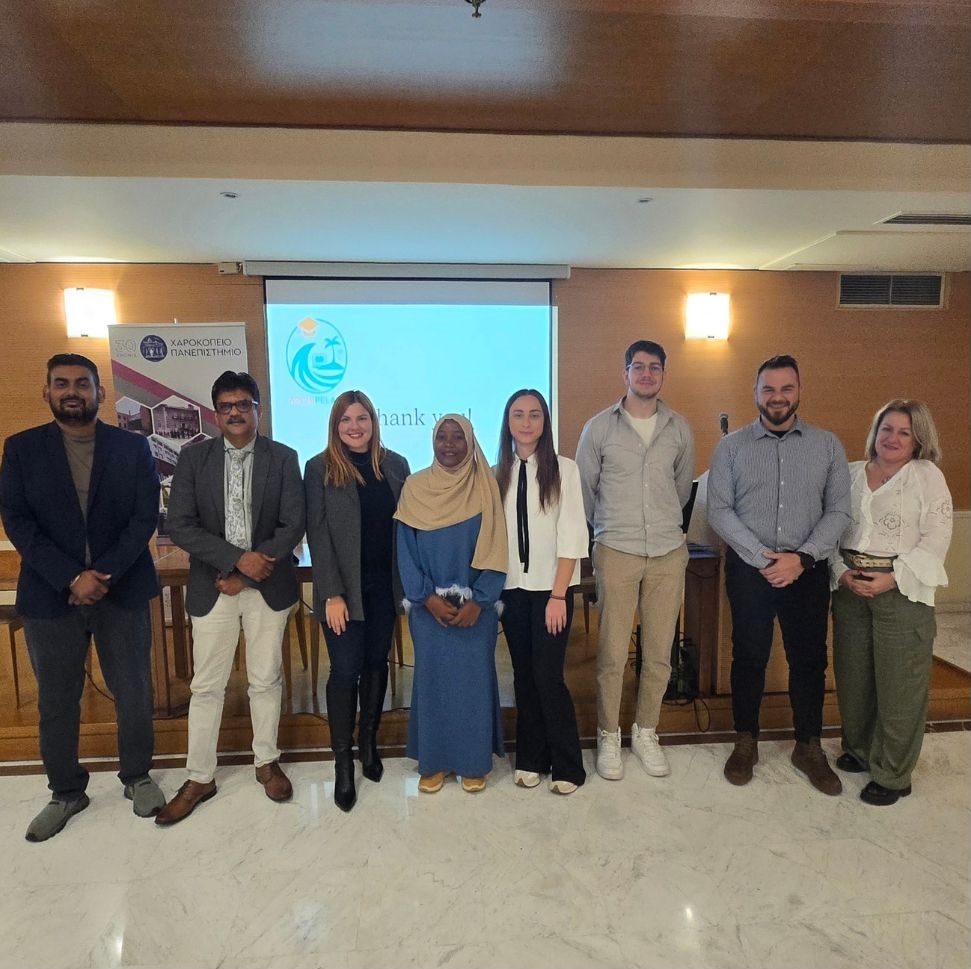
The ARCHIPELAGO project, co-funded by the Erasmus+ CBHE programme, officially launched with its kick-off meeting hosted by Harokopio University of Athens. The project involves six universities and research organisations from Europe, the Caribbean, the Pacific and the Indian Ocean, including the Faculty of Engineering of the Slovak University of Technology in Nitra. The consortium’s common goal is to strengthen digital education and build institutional capacity in small island developing states (SIDS).
The kick-off meeting was an important step towards setting the common direction of the project. The partners focused on aligning the vision and long-term goals, clarifying the work packages, division of tasks and the project’s governance structure. An important part of the programme was also the launch of the needs analysis activities (WP2), which will provide key data for the design of digital platforms, educational tools and other innovations planned in the project.
Discussions during the meeting highlighted the various challenges faced by island regions in the areas of digitalization, technology accessibility, development of professional competences and overcoming geographical barriers. The first joint outputs already show the potential of the ARCHIPELAGO project to create tailor-made solutions for these unique environments.
The Faculty of Engineering of the Slovak University of Applied Sciences in Nitra will play an active role in the project, especially in the areas of digital transformation and technological innovation. Participation in the project represents an opportunity not only to contribute to the development of education in SIDS, but also to strengthen the international position of the faculty in networks dedicated to sustainable and modern forms of higher education.
The ARCHIPELAGO project is now entering the next phase, in which the partners will start with an in-depth analysis of needs, mapping of existing systems and designing the first digital tools. We look forward to continued cooperation and results that will contribute to the development of inclusive and accessible digital education ecosystems in island regions around the world.